


Expertly Written By
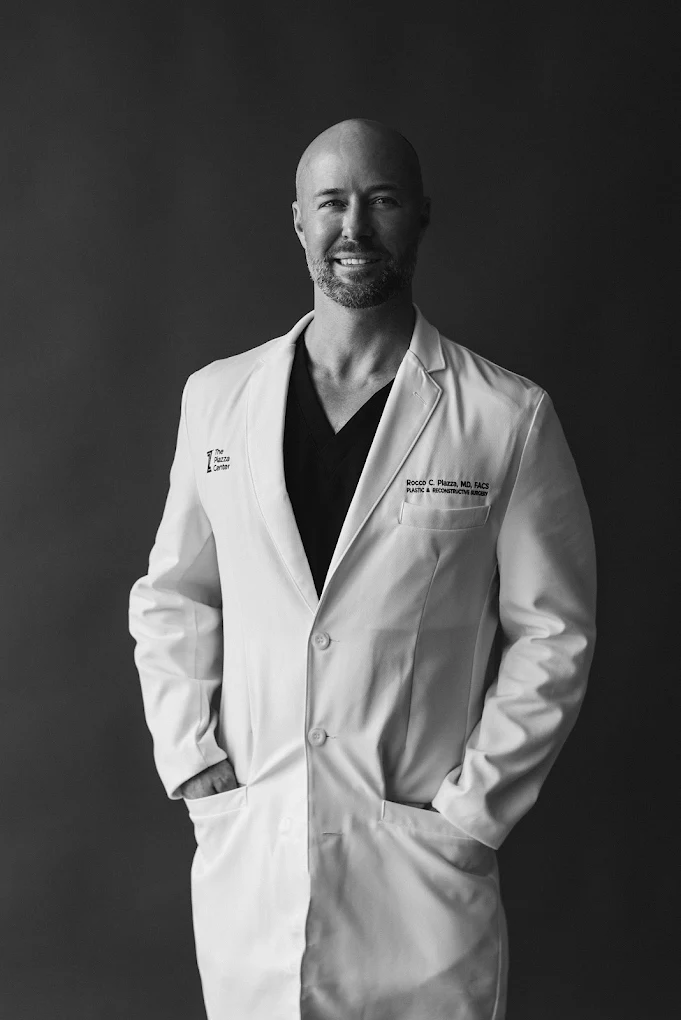
Dr. Rocco Piazza, MD, FACS
Board-Certified Plastic Surgeon practicing in Austin, Texas, and the physician who selects every product on our skincare shelf.
At a Glance
FDA status: No exosome product is FDA approved for any use
Where the warnings point: Injections and IV infusions, not creams and serums
Topical products: Sold as cosmetics, which do not need FDA approval and cannot claim to treat anything
Recent actions: FDA warning letter (May 2026), Qatar ban on injectable exosomes (July 2026)
How we use them: Topically, on intact skin or right after microneedling
Why This Matters: "Exosomes" now covers everything from a $24 drugstore serum to an unlicensed IV drip. The risk sits almost entirely with what goes under the skin and where the product came from. Knowing that difference is how you get the benefit without the gamble. Individual results vary.
Patients ask me some version of this every week: are exosomes legal, are they safe, didn't I read they got banned? The questions are reasonable. The headlines this year have been about injections, the marketing has been about miracles, and the two get blended together on social media.
The short version is that the regulators and I are worried about the same thing. Not the serum on your bathroom shelf, but exosome products injected into skin or veins, often from sources nobody can document. That is a very different product from a cosmetic you apply on the surface, and it deserves a very different answer.
Key Takeaways
- There are no FDA-approved exosome products. Anyone telling you otherwise is wrong.
- The adverse events in the medical literature are from injections and infusions: granulomas, skin necrosis, and the serious infections FDA reported in 2019.
- Topical exosome skincare is legal as a cosmetic. Its quality depends on sourcing, manufacturing and what the label is honest about.

Are Exosomes FDA Approved?
No. The FDA states plainly that "there are currently no FDA-approved exosome products". Exosomes used to treat a condition in people are regulated as drugs and biologics, so any exosome injection or infusion offered outside an FDA-authorized clinical trial is unapproved. Topical exosome skincare is sold as a cosmetic, which does not require FDA approval at all.
That last point is where confusion starts. "Not FDA approved" sounds alarming, but no moisturiser, serum or cleanser is FDA approved either. Under the law, cosmetic products and ingredients (other than color additives) do not need FDA approval before they go on the market. The question for a topical product is not "is it approved" but "is it what it says it is, and is the label honest".
Why Injections Are the Problem
The FDA first warned about exosomes in December 2019, after it learned of serious adverse events in patients in Nebraska treated with unapproved products marketed as containing exosomes. It told patients to ask for an Investigational New Drug (IND) number before any such treatment. That advice still stands.
Enforcement has continued. In May 2026 the FDA's biologics center sent a warning letter to a New Jersey company marketing an "Exosome Therapy" derived from umbilical cord (Wharton's jelly) stem cells, citing it as an unapproved new drug and unlicensed biologic with no approved license and no active IND.
The aesthetic literature now has its own case reports, and every one I have read involves a needle:
- A 2024 case series described eight patients in South Korea who developed firm, red nodules at exosome injection sites between 2 weeks and 3 months after treatment; biopsies showed granulomas. (Nahm, Thunga and Yoo, 2024)
- A separate case report documented skin necrosis following dermal injection of a freeze-dried exosome product. (PubMed Central)
- A 2026 scoping review of 17 dermatology studies called adverse events uncommon, but the ones it found — granulomas, necrosis and allergic reactions — followed injection. (Journal of Drugs in Dermatology)
Uncommon is not the same as zero, and the denominator is unknown, because nobody is tracking how many unapproved injections are being given.
Are Exosome Injections Banned?
In the US, there is no single "ban" headline, because there was never an approval to revoke. Injecting an unapproved biologic outside a trial is simply not a lawful route, and the FDA acts through warning letters and safety notices. Other countries have been more explicit this year.
Regulators on Exosomes: A Timeline
Sources: FDA, FDA warning letter, The Peninsula, Dermatology Times, Medianet.
Qatar, July 2026. The Ministry of Public Health issued a circular prohibiting the administration of exosome injections "in any manner", for medical or cosmetic use, noting that "no exosome product has been approved for injectable use" by its own regulator or the US FDA. Authorised topical products were left alone. That is the line I would draw too.
Australia, September 2026. Dr Tass Tasiopoulos, who runs a Melbourne cosmetic practice that itself uses exosomes, put out a statement warning that many unvetted products lack donor screening, virus testing and sterility documentation, and that injecting products formulated for topical use is off-label. His framing was fair: "That is not a research question. It is a sourcing and governance question." It is worth knowing this came from a clinic press release, not a regulator.
Topical vs Injected Exosomes: The Real Difference
Intact skin is a barrier, and it is a good one. A topical product sits on and in the outer layers. Microneedling opens tiny, temporary channels for a few hours, which is why we apply serums right afterwards, but the channels close and the skin's defences stay mostly in place. An injection places a foreign biological material, in a quantity you cannot see, directly into the dermis or bloodstream.
Topical (serum, post-microneedling)
✓ Regulated as a cosmetic
✓ No FDA approval required, none claimed
✓ Skin barrier stays largely intact
✓ Not the route in the published injection case reports
✓ Allowed in Qatar's July 2026 rules
Injected or IV
✗ Regulated as a drug and biologic
✗ Unapproved; lawful only under an FDA IND
✗ Bypasses the skin barrier entirely
✗ Granulomas and necrosis reported after injection
✗ Prohibited in Qatar since July 2026
Sources: FDA, Qatar MoPH via The Peninsula, Nahm et al. 2024, Journal of Drugs in Dermatology 2026 (linked above).
None of this makes topical products risk-free. Anything applied to freshly needled skin should be sterile, made for that purpose, and from a manufacturer that can tell you where its material came from. It does mean the safety questions are of a different size. For how we sequence products in the days after a procedure, see our day-by-day guide to aftercare after laser, microneedling and peels.
What a Topical Exosome Label Can Legally Say
Because the law defines a product by its intended use, the words on the bottle matter. The FDA lists claims such as "regenerating cells", restoring hair growth and changing skin melanin as claims that make a product a drug, even if it is sold as a cosmetic.
| Wording on the label | What it signals |
|---|---|
| "Improves the look of fine lines", "visibly brighter", "smoother texture" | Normal cosmetic claims about appearance. |
| "Regenerates cells", "heals", "treats acne scars", "regrows hair" | Drug claims. A cosmetic making them is out of bounds. |
| "FDA approved" or "FDA cleared exosomes" | Not true of any exosome product. Walk away. |
| "For injection" or "inject" in the instructions | An unapproved biologic route. Not something we will do. |
Based on the FDA's guidance on cosmetic versus drug claims.
How to Vet an Exosome Product
The evidence for exosome skincare is early. A 2026 systematic review in the Aesthetic Surgery Journal found encouraging results but small, varied studies and non-standard protocols, and a 2023 review in Plastic and Reconstructive Surgery Global Open found prices ranging from about $60 to nearly $5,000 depending on source tissue and concentration. In a market that wide, sourcing is the thing you can actually check.
The Exosome Vetting Checklist
☐ Source named. Which cells or plant, human or not. "Stem cell" alone is not an answer.
☐ Donor screening. For human-derived material: consented donors, infectious disease testing, documented eligibility.
☐ GMP manufacturing. A real facility, sterility and endotoxin testing, batch records.
☐ A stated amount. A particle count or concentration, not just the word "exosome" on the front.
☐ Topical directions only. No injection instructions, no "FDA approved", no disease claims.
☐ Sold through medical providers who can answer these questions and handle a reaction if one happens.
Checklist reflects the sourcing gaps named by the FDA, the Qatar MoPH and published case reports cited in this article.
Apply that checklist to what we use and you get specific answers. INVO states its exosomes come from three human cell sources — fibroblasts, umbilical cord and bone marrow — and that its Rejuvenating Complex contains more than 1.2 trillion exosomes alongside over 1,200 growth factors, proteins and peptides. It is sold through physicians, with Dr. Melanie Palm, a board-certified dermatologist in Solana Beach, on its medical advisory board. For how exosomes differ from the growth-factor serums that came before them, read exosomes vs growth factors.

"I am comfortable using a well-sourced exosome serum on the skin's surface, including right after microneedling. I am not comfortable injecting a biologic that no regulator has approved and whose source I cannot verify. Those are two different decisions, and patients deserve to hear them separately." — Dr. Rocco Piazza, MD, FACS
How We Use Exosomes at The Piazza Center
We use exosomes topically. We do not inject them. In practice that means two places:
In the clinic, right after microneedling. The channels are open for a short window, and a sterile exosome product applied then is the reason the treatment is called microneedling with exosomes. After laser, it goes on once your provider clears it.
At home, morning and night. INVO Rejuvenating Complex goes on clean skin before moisturiser, and before a retinoid at night. Give it eight weeks before judging it. It is not a filler, it does not lift lax skin, and it will not do what a laser does. What it is meant to do is support the look of tone, texture and fine lines over time, and it is gentle enough to use around procedures.

Video: Dr. Rocco Piazza (@roccopiazzamd) on which skincare trends stand the test of time.
What We Stock
- INVO Rejuvenating Complex Exosome Serum, 30 mL — $285, about $9.50 per mL. Our at-home exosome serum, with vitamin C and peptides built in. We explain why we chose it in our INVO review.
- EXO EYE — an eye cream combining NAD+, eXo3 exosomes and peptides.
- EXO PLUS — an exosome cream for those who prefer a cream texture.
Exosome Safety: Common Questions
Are exosomes FDA approved?
No. The FDA says there are currently no FDA-approved exosome products. Topical exosome skincare is sold as a cosmetic, and cosmetics do not require FDA approval.
Are exosome injections legal in the US?
Exosomes used to treat people are regulated as drugs and biologics. Without FDA approval, the only lawful route is a clinical trial under an IND. The FDA advises patients to ask for that IND number before any exosome injection or infusion.
Are topical exosomes safe?
The published adverse events involve injections. Topical products from reputable, medically distributed brands are generally well tolerated, though any product can irritate sensitive skin. Patch test if you are reactive. Individual results vary.
Is it safe to put exosomes on skin after microneedling?
This is a common pairing when the product is sterile, designed for post-procedure use and applied by your provider. It is different from injecting. Follow the aftercare your provider gave you.
Why did Qatar ban exosome injections?
Its Ministry of Public Health said products were being promoted for injection although none is approved for that use, and that safety and efficacy have not been proven. Authorised topical products were not included in the ban.
Is IV exosome therapy safe?
No IV exosome product is FDA approved, and the FDA's 2019 safety notice followed serious adverse events in patients given unapproved exosome products. We do not offer it and do not recommend it outside a registered clinical trial.
How do I know an exosome serum is legitimate?
Look for a named cell source, donor screening, GMP manufacturing, a stated exosome amount and topical-only directions. Avoid anything labelled "FDA approved" or sold with injection instructions.
Individual results vary. The products discussed are cosmetic products and are not intended to diagnose, treat, cure or prevent any disease. No exosome product is FDA approved. Manufacturer figures are as stated by the manufacturer. Cited studies and regulatory documents are linked to their published sources. This article is for educational purposes and does not constitute medical advice; speak with a qualified physician about what is appropriate for your skin.
Curious About Exosomes, Without the Guesswork?
Dr. Rocco Piazza and our Austin skin team can tell you where exosomes fit in your routine or your next microneedling treatment — and where they do not.
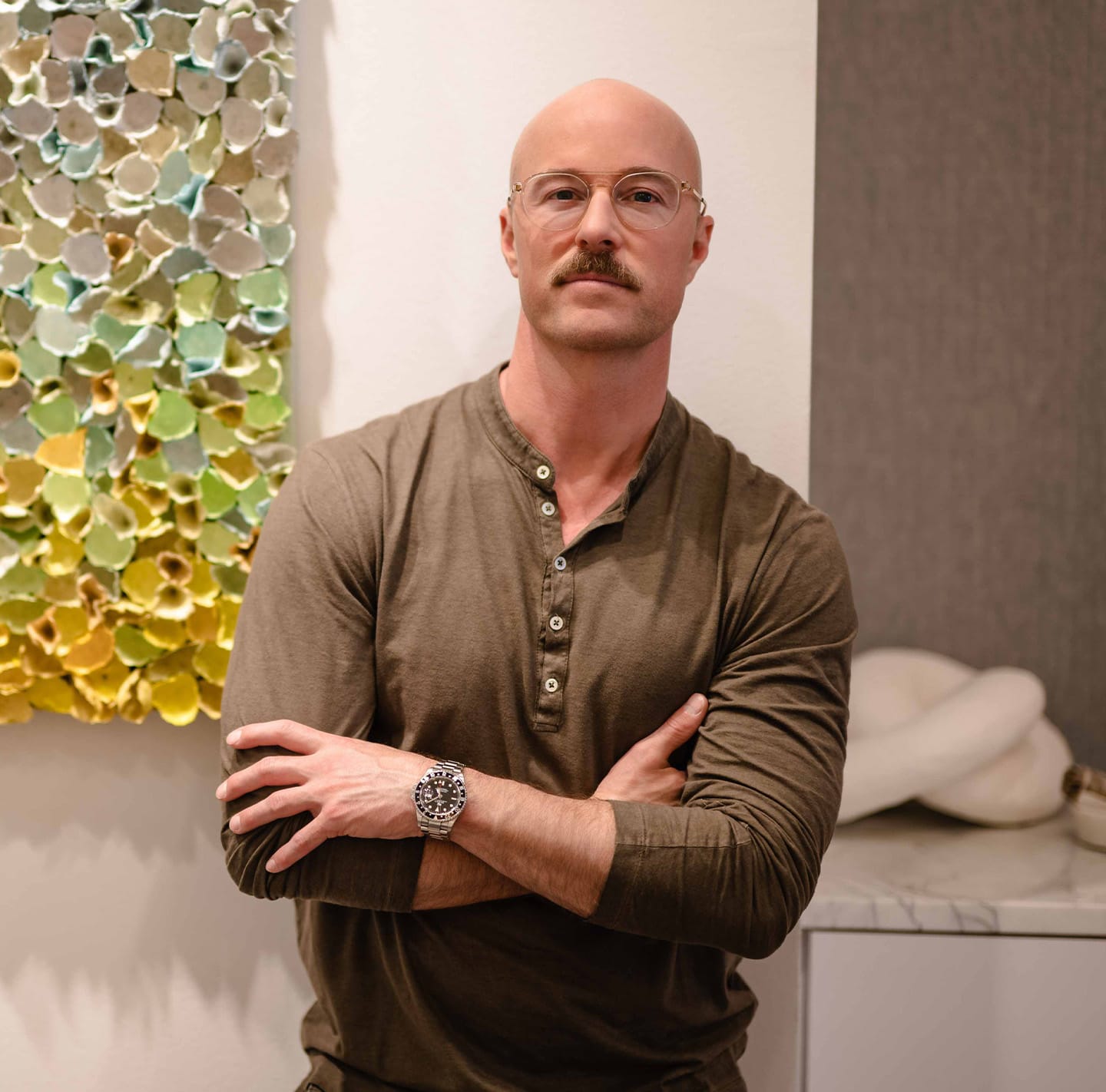
Dr. Rocco Piazza II
Board-Certified Plastic Surgeon
Dr. Piazza is a board-certified plastic surgeon practicing in Austin, TX. He specializes in aesthetic and reconstructive surgery with a focus on natural results.