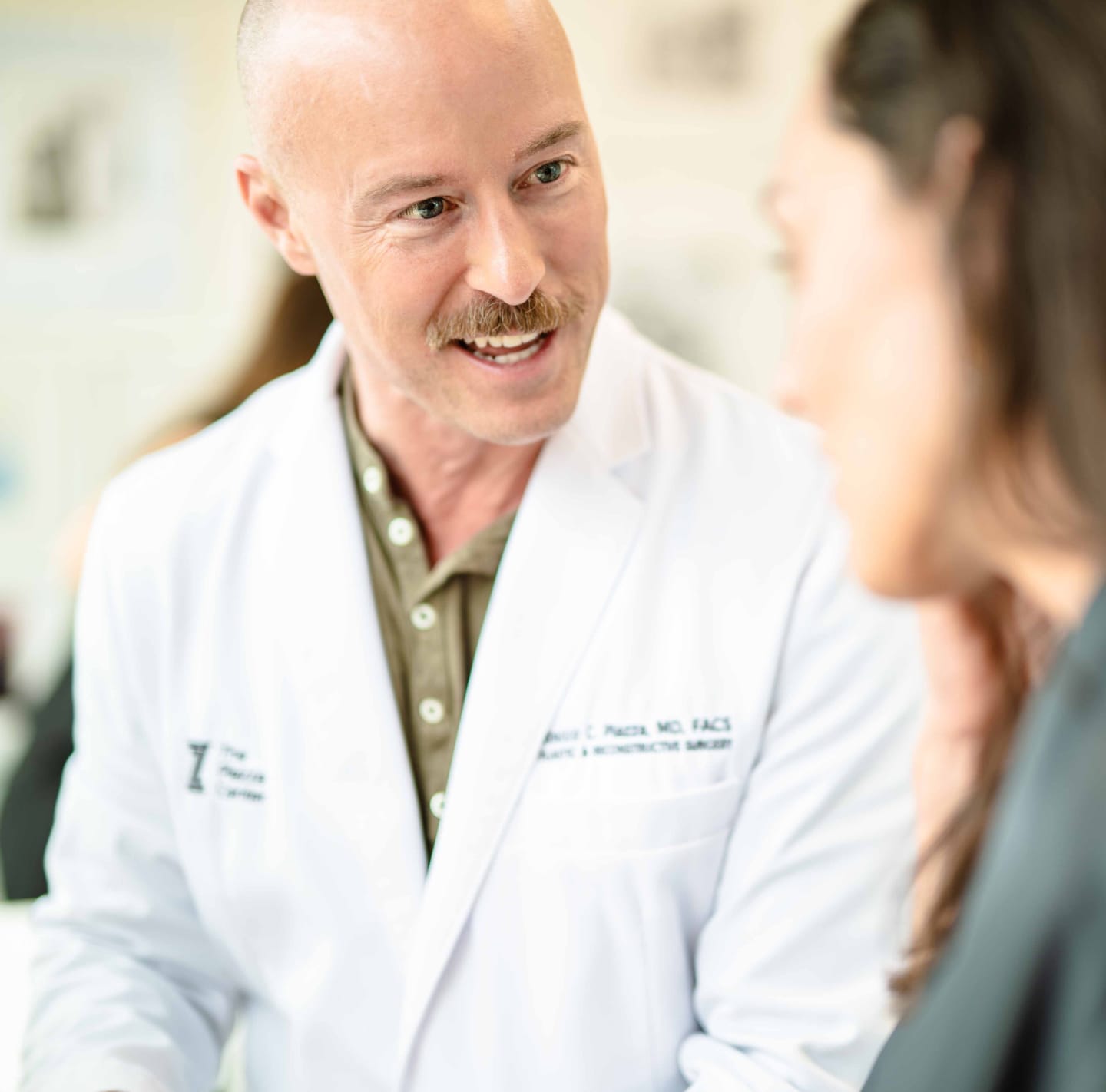


Dr. Rocco C. Piazza, MD, FACS
Board-certified plastic surgeon · The Piazza Center, Austin, Texas
Medically reviewed · Updated September 2026
Melasma at a Glance
What it is
Brown or grey-brown patches, usually cheeks, forehead, upper lip
Main triggers
Hormones, UV and visible light, heat, genetics
First-line defense
Daily mineral SPF + an iron-oxide tinted layer
In-office options
Moxi laser, microneedling with PRF
Realistic goal
Control and lighten; melasma can return
Best next step
Skin consultation in Austin
Why this guide was updated: most melasma routines fail on sunscreen, not treatment. Visible light, not just UV, darkens melasma, and only tinted sunscreens block it. We've rewritten the sunscreen section around that research.
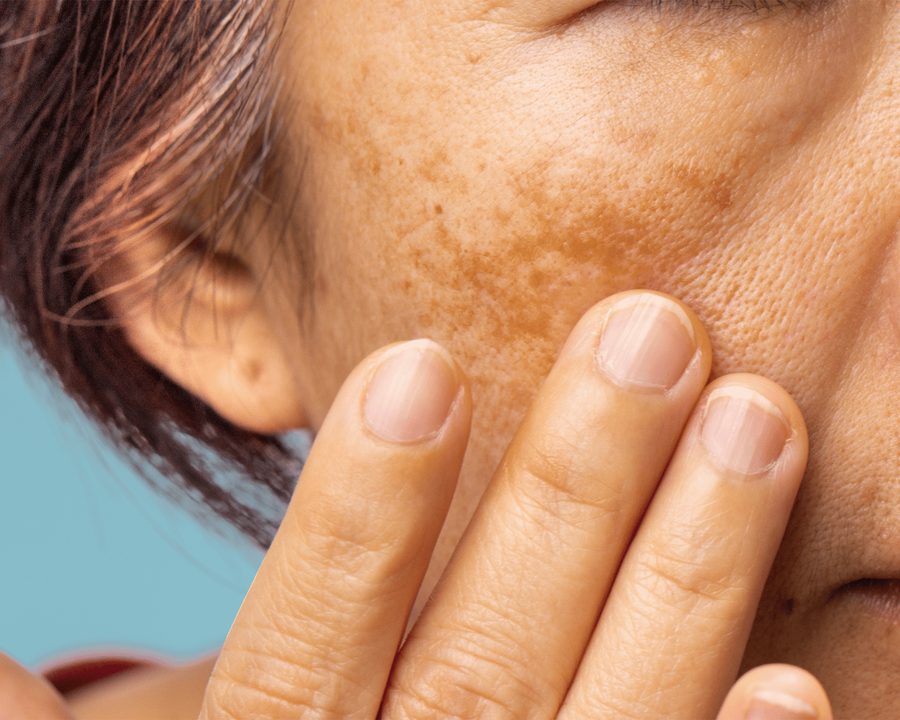
Melasma causes dark, blotchy patches, most often on the face. It mainly affects women, especially during hormonal changes such as pregnancy or while taking birth control. It isn't harmful, but it's stubborn, easy to trigger again, and frustrating when it's the first thing you notice in the mirror.
This guide covers what causes melasma, why so many patients who "wear sunscreen every day" still flare, and how we build treatment plans at The Piazza Center in Austin: the daily skincare that protects your results, and the in-office treatments that lighten existing pigment.
What is melasma?
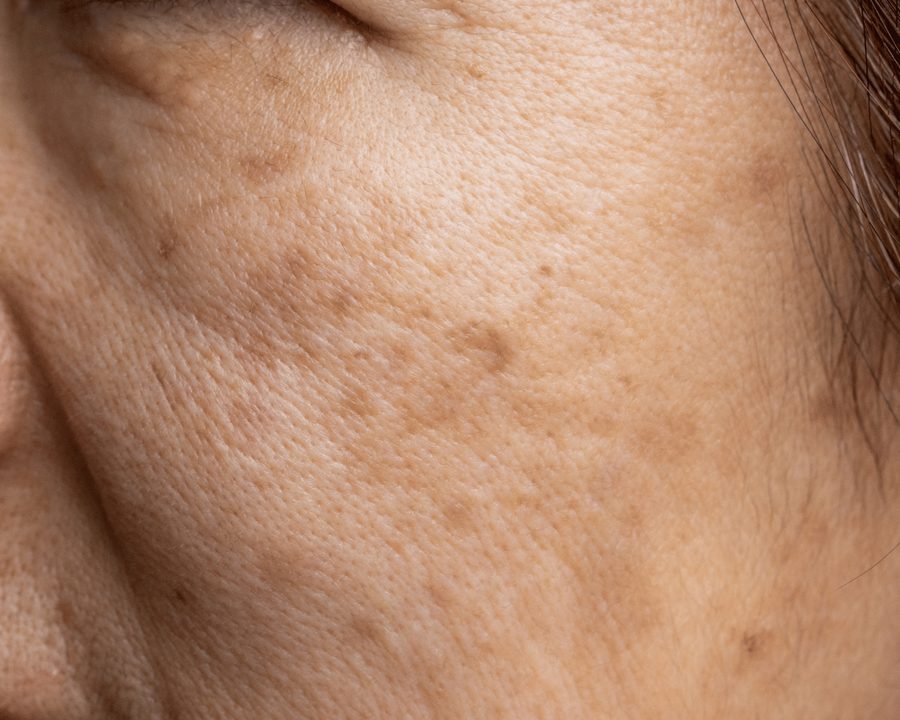
Melasma is a pigmentation disorder in which melanocytes (the cells that make pigment) become overactive in patches. It typically shows up on the cheeks, forehead, bridge of the nose, upper lip and chin, often symmetrically. It's sometimes called the "mask of pregnancy," but it also appears with birth control, hormone therapy, or no clear hormonal trigger at all.
What triggers melasma
☀️
Sun: UV and visible light
UV is the obvious trigger. Visible light, which clear sunscreens let through, also darkens melasma, especially in medium and deeper skin tones.
🧪
Hormones
Pregnancy, oral contraceptives and hormone therapy are common triggers.
🔥
Heat
Hot yoga, saunas and a Texas summer can all make patches darker.
🧬
Genetics
Melasma often runs in families and is more common in skin types III–VI.
⚠️
Irritation
Harsh scrubs, aggressive peels and the wrong laser can make pigment worse.
Why sunscreen fails so many melasma patients
This is the most important part of this guide. Most patients we see with persistent melasma are already wearing sunscreen, usually a good, high-SPF, clear one. The problem is that SPF measures only UVB protection, and melasma also responds to visible light: the light you can see, which makes up roughly 45% of sunlight.
What each sunscreen ingredient actually covers
SPF only measures UVB. Neither SPF nor the "broad spectrum" label tells you anything about visible light, which is why a high-SPF clear sunscreen can still leave melasma flaring.
Zinc oxide, the mineral we recommend as a UV filter, gives excellent UVB and UVA coverage. What blocks visible light is a tint made from iron oxides, the same pigments that give tinted sunscreens their color. Clear formulas, whatever the SPF, leave that part of the spectrum open.
Double-blind randomized trial · 2014
68 melasma patients, all on the same 4% hydroquinone. The group using an iron-oxide tinted SPF 50 improved more than the group using an untinted SPF 50.
Read the study →Randomized trial · JAAD 2015
A sunscreen covering short visible wavelengths was compared with UV-only protection for preventing melasma relapse. Fewer patients relapsed with the visible-light sunscreen.
Read the study →12-week clinical study · JDD 2025
In women with skin types III–VI, 36% of melasma participants using SPF 50 plus iron oxide showed superior improvement in skin radiance, versus 0% on SPF 50 alone.
Read the study →For the full breakdown of zinc oxide versus iron oxides, tint shades and application, read our companion guide: Zinc Oxide for Melasma: Why the Tint Matters.
The melasma sunscreen routine we recommend
We build daily protection in two layers. A 100% zinc oxide base you'll actually wear every day, plus an iron-oxide tinted layer for visible light. On low-exposure days indoors, one tinted product on its own is a reasonable minimum.
Morning routine for melasma-prone skin
Cleanse gently
No scrubs or harsh acids in the morning. Irritation is its own melasma trigger.
Antioxidant serum (optional)
A vitamin C serum adds an antioxidant layer under sunscreen.
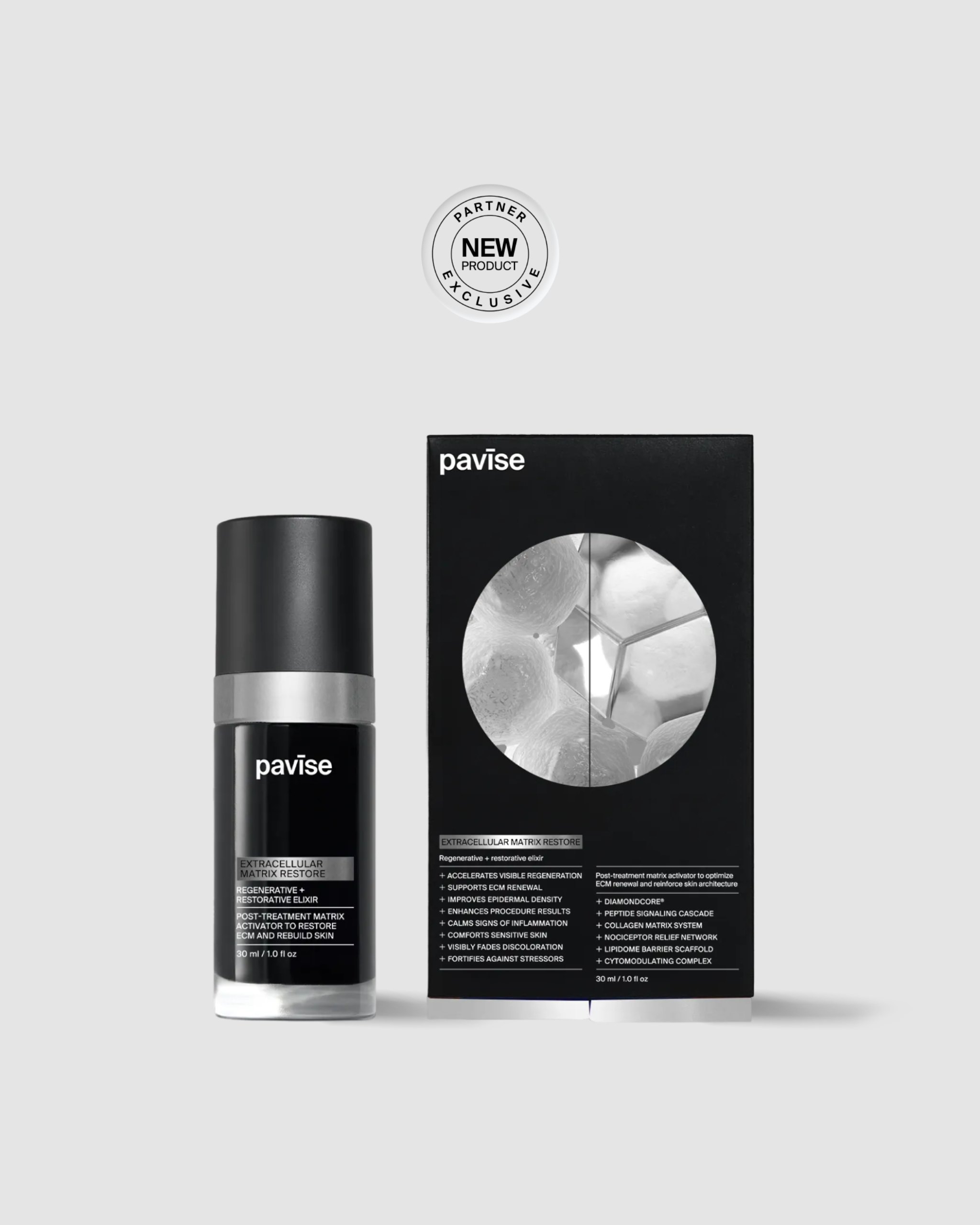
Mineral base: Pavise Dynamic Age Defense SPF 30
15% zinc oxide in a transparent finish, plus tranexamic acid and niacinamide. Apply a full layer and let it set for a minute.
Tinted layer: EltaMD Tinted
The iron-oxide tint covers visible light. Apply over your base. It also evens tone, so it can replace foundation.
Reapply
Every two hours outdoors, and after sweating. Your car, office windows and Texas afternoons all count.


Choosing by budget
| EltaMD UV Physical Tinted | EltaMD UV Clear Tinted | Pavise Dynamic Age Defense | |
|---|---|---|---|
| Price | $30.80 | $45 | $148 |
| UV filters | 9% zinc oxide, 7% titanium dioxide | 9% zinc oxide, 7.5% octinoxate | 15% zinc oxide |
| Iron-oxide tint (visible light) | ✓ Yes | ✓ Yes | — Clear; pair with a tint |
| Pigment-support actives | — | Niacinamide | Tranexamic acid, niacinamide |
| Finish | Sheer tint, matte | Sheer tint, oil-free | Transparent, no white cast |
| Best for | Budget, oily or sensitive skin | Acne- or rosacea-prone skin | Daily base for patients investing in pigment control |
Filter percentages from each manufacturer's label. Always check the carton, since formulas change. On mobile, swipe the table →
Our honest take: if the budget is tight, an EltaMD tinted sunscreen worn every day, reapplied, is enough to cover UV and visible light. Pavise Dynamic Age Defense is our pick for patients who want a mineral base with tranexamic acid built in and who want to layer. It isn't a substitute for the tint.
Shop the full pigment protocol
Every sunscreen and pigment product we use for melasma, in one place.
Topical treatments for melasma
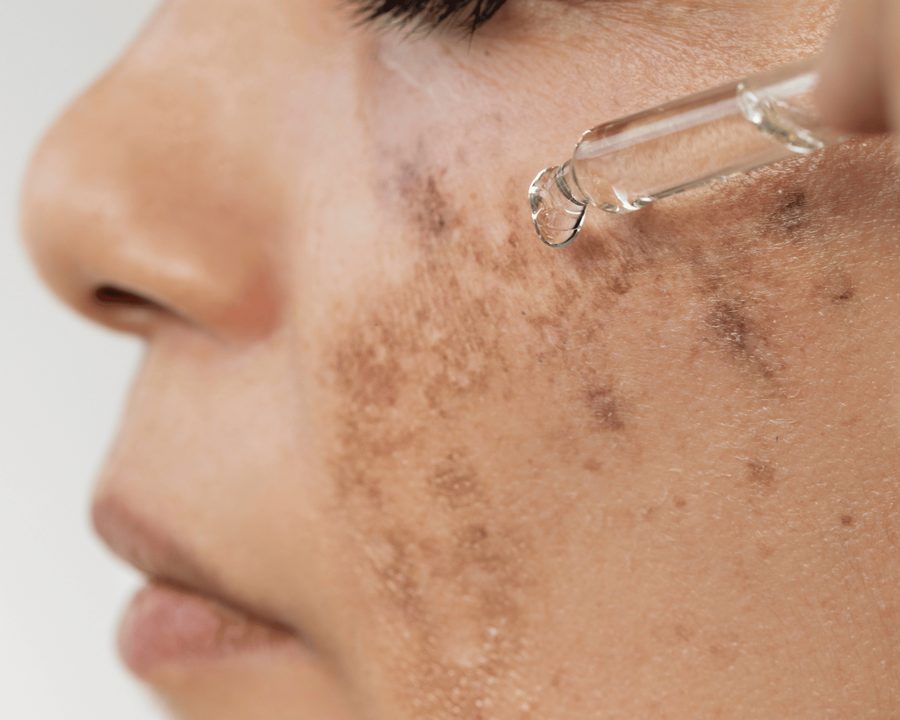
Topicals work best as the base of a plan, with sunscreen already in place. Common options:
- Hydroquinone is the long-standing prescription lightener. It's used in cycles under medical supervision, not indefinitely.
- Tranexamic acid has good evidence in melasma. A 2024 meta-analysis of randomized trials found it reduced severity, with oral forms showing the largest effect and topical results smaller and more variable (meta-analysis). Oral tranexamic acid is prescription-only and not right for everyone. Ask us before considering it.
- Retinoids speed cell turnover. Introduce them slowly: irritation can cause post-inflammatory pigment, the opposite of what you want.
- Vitamin C is an antioxidant that supports brighter, more even skin under sunscreen.
- Azelaic acid and kojic acid are gentler lighteners, often useful when stronger actives aren't tolerated.


In-office treatments for melasma
Moxi laser for melasma
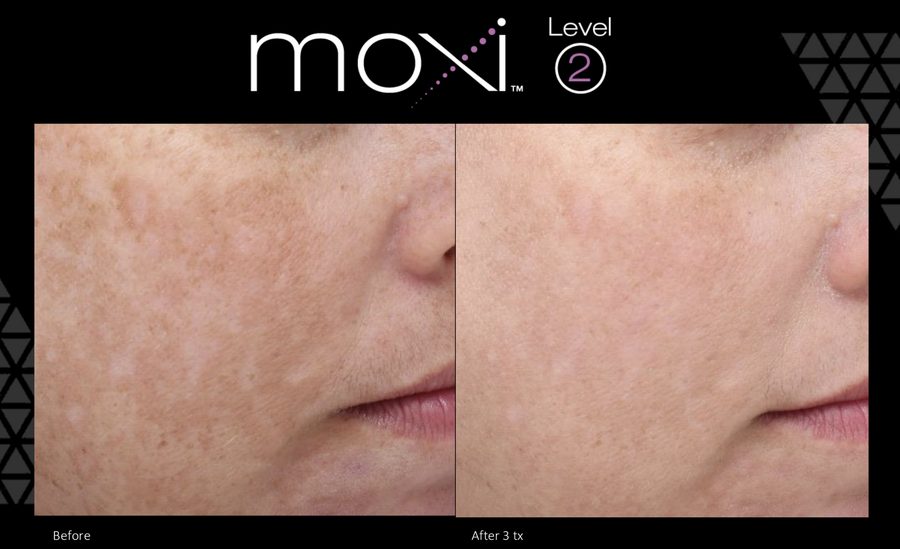
Moxi is a gentle, non-ablative fractional laser. Aggressive heat-based lasers can make melasma worse. Moxi works in low-energy passes that refresh the skin with less heat and less downtime, which is why it's our go-to laser for melasma-prone patients. A series of treatments usually works better than a single session.
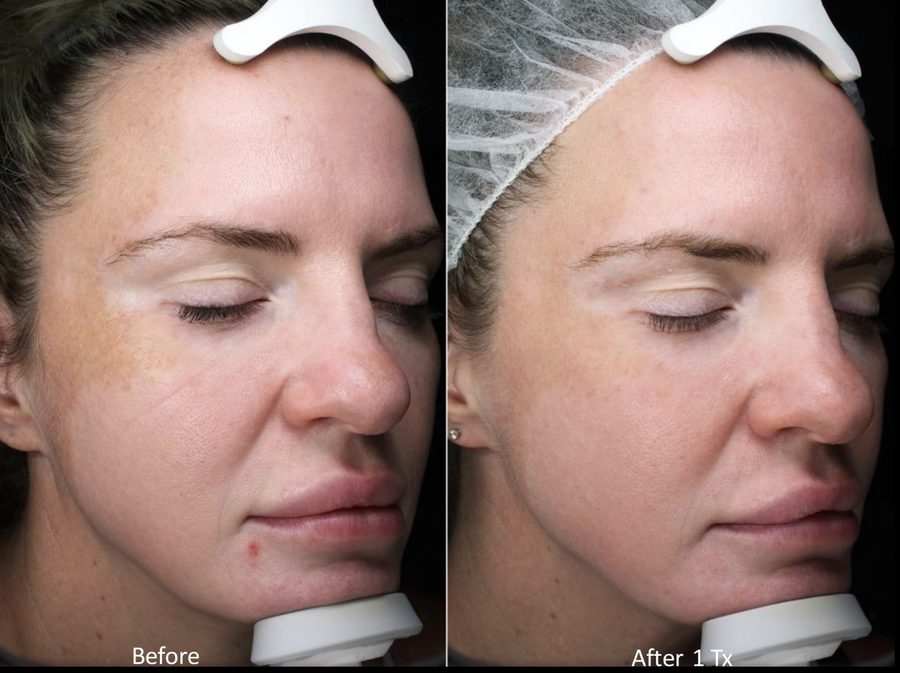
See a real result: our Moxi for melasma case study walks through the protocol our medical aesthetician uses, and our BBL HERO + Moxi pigmentation result shows a combination approach.
Microneedling with PRF
Microneedling creates controlled micro-channels that stimulate renewal. Paired with PRF (platelet-rich fibrin, drawn from your own blood), it supports healing and more even tone without laser heat, an option for patients whose melasma has reacted badly to lasers before.
Chemical peels
Light, carefully chosen peels can help, but strong peels carry a real risk of rebound pigmentation in melasma. We choose peel depth conservatively and always pair peels with strict sun protection.
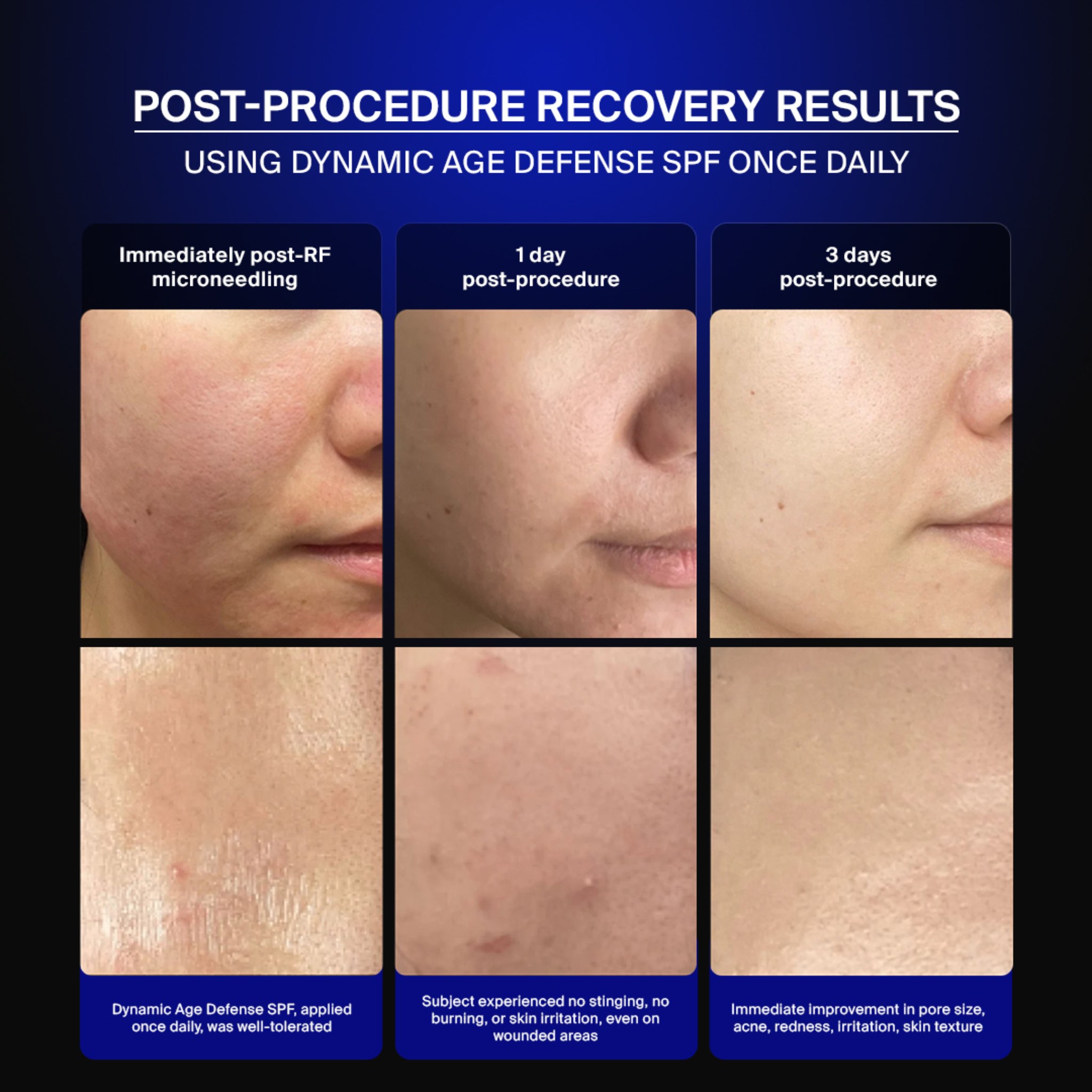
After any procedure, protection matters even more. Freshly treated skin is more reactive to UV and visible light. Your provider will tell you when to restart sunscreen and actives. Follow their timeline, not a product label.
Managing melasma during pregnancy
Many women notice melasma during pregnancy. For some it fades after delivery; for others it stays. During pregnancy and breastfeeding, skip retinoids and in-office treatments like peels and lasers, and check every new product with your OB, including tranexamic acid. Mineral sunscreen and a hat are the foundation, and tinted mineral formulas cover visible light too.
“I can help rebuild collagen. I can't rebuild it faster than the sun takes it.”
— Rocco C. Piazza, MD, FACS, Board-certified plastic surgeon
Frequently asked questions
What is the best sunscreen for melasma?
A sunscreen that covers UV and visible light, which means a tinted formula with iron oxides, worn daily and reapplied. We recommend a 100% zinc oxide base such as Pavise Dynamic Age Defense, layered with an EltaMD tinted sunscreen. On a budget, one EltaMD tinted formula covers both.
Does zinc oxide alone protect against melasma?
Zinc oxide is an excellent UVA and UVB filter, but in a clear formula it does little against visible light, which also darkens melasma. Adding an iron-oxide tint closes that gap.
Why is my melasma getting worse even though I wear SPF 50?
SPF measures UVB only. A clear SPF 50 can leave visible light, heat and missed reapplication unaddressed. Switch to a tinted formula, reapply through the day, and look at heat and hormonal triggers.
Can melasma be cured?
Melasma can be lightened and controlled, often significantly, but it tends to come back when triggers return. Plan on ongoing daily protection, with maintenance treatments as needed.
Is laser safe for melasma?
The wrong laser can make melasma worse. Gentle, low-heat options such as Moxi are better suited to melasma-prone skin, and settings matter. That's why melasma treatment should start with a consultation.
How long does melasma treatment take to work?
Most patients see changes over several months, not weeks. Topicals and daily protection take time, and in-office treatments are usually done as a series.
Individual results vary. This article is for educational purposes and does not constitute medical advice. Product prices shown were current at the time of writing and may change; see the shop for current pricing. The Piazza Center sells the products linked in this article.
Get a melasma plan built for your skin
Every melasma case is different. Book a consultation with our skin team in Austin, or start today with the sunscreens we recommend.
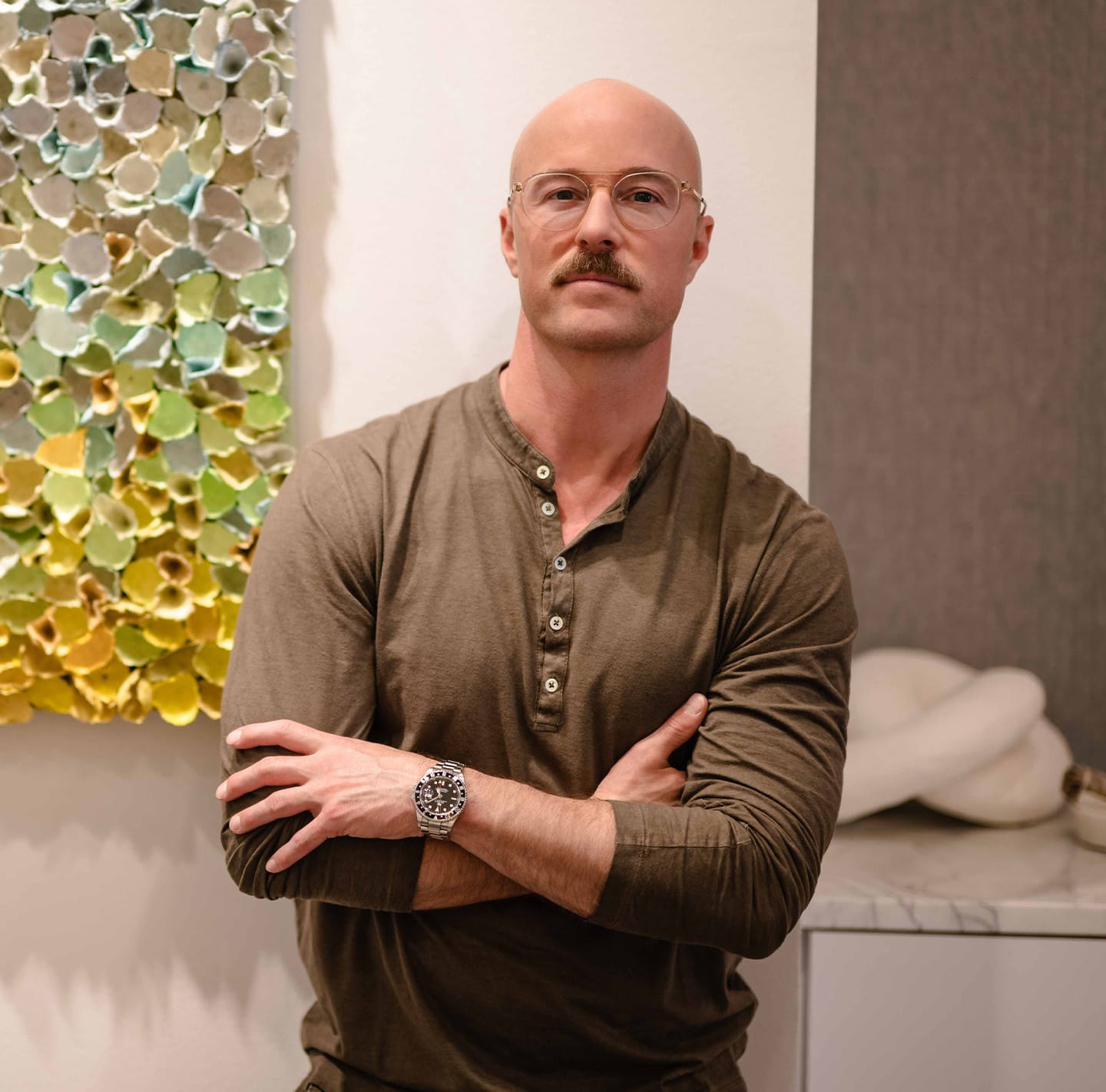
Dr. Rocco Piazza II
Board-Certified Plastic Surgeon
Dr. Piazza is a board-certified plastic surgeon practicing in Austin, TX. He specializes in aesthetic and reconstructive surgery with a focus on natural results.