


Dr. Rocco C. Piazza, MD, FACS
Board-certified plastic surgeon · The Piazza Center, Austin, Texas
Medically reviewed · Updated September 2026
The Short Answer
Does zinc oxide help melasma?
Yes, for UV. It's the broadest-spectrum UV filter available
What it misses
Visible light, which also darkens melasma
What closes the gap
Iron oxides, the pigments in tinted sunscreen
Our recommended pairing
15% zinc base + EltaMD tinted layer
Budget pick
EltaMD UV Physical Tinted SPF 41, $30.80
Reapply
Every 2 hours outdoors
Bottom line: zinc oxide is the right UV filter for melasma, but a clear zinc sunscreen alone leaves visible light unblocked. Add a tint.
If you have melasma, you've probably been told to wear a mineral sunscreen with zinc oxide. That's good advice, as far as it goes. Zinc oxide is gentle, stable and covers both UVB and the long UVA wavelengths that drive pigment. But many patients follow that advice perfectly and still watch their patches darken.
The missing piece is visible light. This guide explains what zinc oxide does and doesn't do for melasma, why the tint in a sunscreen matters as much as the SPF, and how to build a routine that covers both.
What zinc oxide does for melasma
Zinc oxide is a mineral UV filter. It protects across UVB (burning rays) and UVA (the deeper, tanning and aging rays), including the long-wave UVA1 range that many filters cover poorly. For melasma-prone skin it has three advantages:
● Broad UV coverage
Covers UVB through UVA1 with a single ingredient.
● Gentle
Rarely irritating. That matters, because irritation itself can trigger pigment.
● Stable
Doesn't break down in sunlight the way some chemical filters do.
What zinc oxide misses: visible light
Visible light, the part of sunlight you can see, makes up roughly 45% of the sun's output, and research shows it can darken skin and worsen melasma, especially in medium and deeper skin tones. A clear zinc sunscreen is engineered to be invisible, which means it lets most visible light straight through.
What each sunscreen ingredient actually covers
SPF only measures UVB. Neither SPF nor the "broad spectrum" label tells you anything about visible light, which is why a high-SPF clear sunscreen can still leave melasma flaring.
That's also why SPF isn't the number to chase for melasma. SPF measures protection from UVB only. A clear SPF 50 and a clear SPF 30 both do little against visible light.
Why iron oxides are the missing piece
Iron oxides are the mineral pigments that give tinted sunscreens their color. Because they absorb visible light, they block the wavelengths zinc lets through. A review of tinted sunscreens in the Journal of the American Academy of Dermatology notes that tinted mineral formulas with iron oxides reduce visible light transmission more effectively than untinted zinc oxide or titanium dioxide sunscreens (review). The clinical studies point the same way:
Double-blind randomized trial · 2014
68 melasma patients on the same hydroquinone treatment. Those using an iron-oxide tinted SPF 50 improved more than those on untinted SPF 50.
Read the study →Randomized trial · JAAD 2015
Adding short visible-light protection to UV protection was studied for preventing melasma relapse. Fewer patients relapsed.
Read the study →12-week study · JDD 2025
36% of melasma participants on SPF 50 plus iron oxide showed superior improvement in skin radiance, versus 0% on SPF 50 alone.
Read the study →Zinc oxide vs. iron oxide: side by side
| Zinc oxide | Iron oxides | |
|---|---|---|
| What it is | Mineral UV filter (an FDA sunscreen active) | Mineral pigment (not an SPF active) |
| Protects against | UVB and UVA, including UVA1 | Visible light |
| Shows on the label as | Active ingredient, with a % | Inactive ingredient |
| Adds to SPF number? | Yes | No |
| Appearance | Clear to white, depending on formula | Tinted, evens skin tone |
| Role in melasma | Essential UV base | Blocks the trigger clear sunscreens miss |
You need both. Look for zinc oxide in the active ingredients and iron oxides in the inactives. On mobile, swipe the table →
How we recommend using zinc and tint together
At The Piazza Center we build melasma protection in two layers. The base is a 100% zinc oxide sunscreen you'll wear every single day. The top layer is an iron-oxide tinted sunscreen that adds visible-light protection and evens tone.
The two-layer melasma sunscreen routine
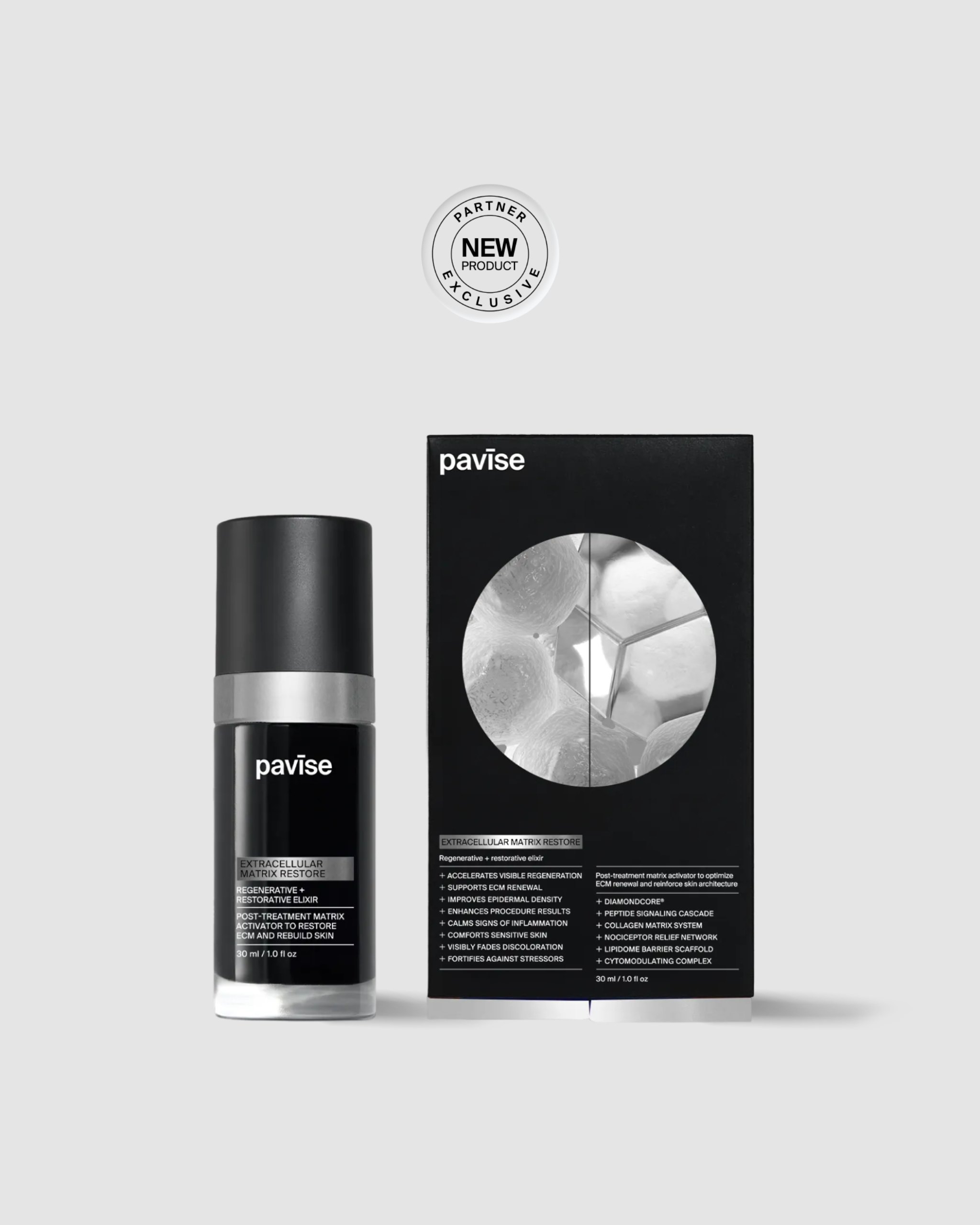
Base: Pavise Dynamic Age Defense SPF 30
15% zinc oxide in a transparent finish. Pavise's DiamondCore® technology is designed to keep a high-zinc formula from leaving a white cast, so you'll actually wear it. It also contains tranexamic acid and niacinamide, two ingredients studied in pigmentation.
Let it set
Give it a minute to settle before the next layer.
Tint: EltaMD UV Clear Tinted or UV Physical Tinted
The iron-oxide tint layer. Choose UV Clear Tinted for acne- or rosacea-prone skin, UV Physical Tinted for a 100% mineral, water-resistant option.
Reapply
Every two hours outdoors and after sweating. A tinted sunscreen doubles as a light foundation for touch-ups.


On a budget? One EltaMD tinted sunscreen, applied generously and reapplied, covers UV and visible light. The Pavise base is for patients who want a high-zinc, transparent mineral layer with tranexamic acid built in. It isn't a replacement for the tint.
How to tell if your sunscreen has iron oxides
- Look at the inactive ingredients for "iron oxides" (sometimes listed as CI 77491, CI 77492, CI 77499).
- Look at the product. If it's tinted beige or brown, it almost certainly uses iron oxides.
- Don't rely on marketing terms like "blue light protection" alone. Check the ingredient list.
Everything for melasma-prone skin
Our full pigment protocol: sunscreens, tints and pigment-support skincare.
Sunscreen is the foundation, not the whole plan. For topicals and in-office treatments like Moxi laser, read our full guide: Treating Melasma in Austin: Why Sunscreen Fails & What Works.
“I can help rebuild collagen. I can't rebuild it faster than the sun takes it.”
— Rocco C. Piazza, MD, FACS, Board-certified plastic surgeon
Frequently asked questions
Is zinc oxide good for melasma?
Yes. Zinc oxide is an excellent, gentle UV filter and a good base for melasma-prone skin. On its own, in a clear formula, it doesn't block much visible light, so pair it with an iron-oxide tint.
What percentage of zinc oxide is best for melasma?
There's no single magic number, and the zinc percentage mainly affects UV protection. For melasma, whether the formula includes an iron-oxide tint matters more than a few extra points of zinc.
Does Pavise Dynamic Age Defense have iron oxides?
No. It's a clear, 15% zinc oxide mineral sunscreen with tranexamic acid and niacinamide. For visible-light protection we pair it with an EltaMD tinted sunscreen.
Is tinted sunscreen better for melasma?
Yes. The iron oxides in tinted mineral sunscreens block visible light, which clear sunscreens let through. Clinical studies have found better melasma outcomes with tinted formulas.
Can I layer two sunscreens?
Yes. Apply the base first, let it set, then the tinted layer. The SPF numbers don't add up, but you get the base's ingredients plus the tint's visible-light coverage.
Does blue light from screens cause melasma?
Most visible-light research focuses on sunlight, which is far more intense than screens. Sunlight through windows and outdoors is the priority.
Individual results vary. This article is for educational purposes and does not constitute medical advice. Product prices shown were current at the time of writing and may change; see the shop for current pricing. The Piazza Center sells the products linked in this article.
Protect your results, and your skin
Get a melasma plan tailored to your skin from our team in Austin, or shop the sunscreens we recommend today.

Dr. Rocco Piazza II
Board-Certified Plastic Surgeon
Dr. Piazza is a board-certified plastic surgeon practicing in Austin, TX. He specializes in aesthetic and reconstructive surgery with a focus on natural results.